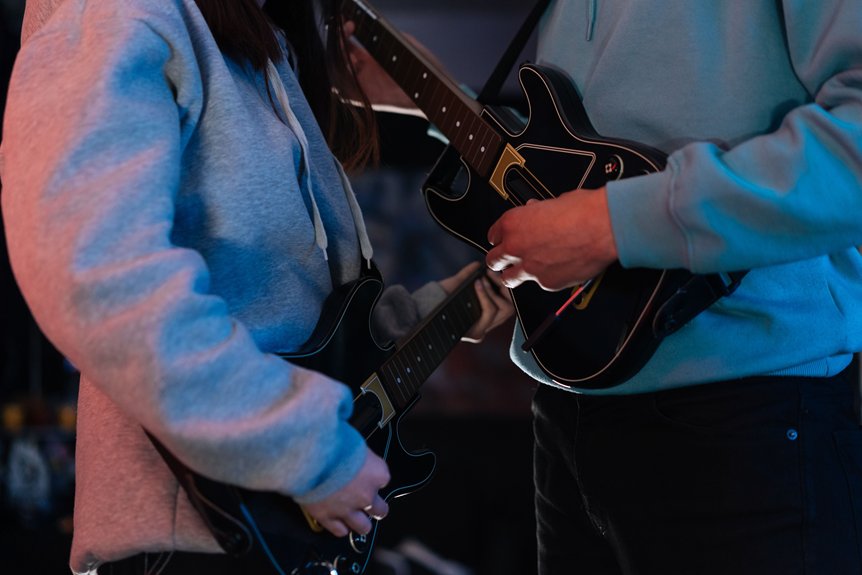
Rocksmith requires a recognized instrument signal, typically via a wired cable. Alternatives like Bluetooth or Wi‑Fi can transmit the signal but introduce latency and stability issues that disrupt timing. The setup hinges on robust pairing, low-latency adapters, and thoughtful controller placement. While possible, misfires and delayed responses are likely. The balance between tone and responsiveness matters most, and practical tuning will determine whether a cable-free approach works, leaving the outcome uncertain as technologies and environments vary.
What Rocksmith Needs to Recognize a Real Instrument
To recognize a real instrument, Rocksmith relies on verifying signal characteristics that distinguish an actual guitar or bass from a simulated input.
The system analyzes timing, spectral content, and amplitude consistency to confirm legitimate string activity.
This ensures Rocksmith compatibility and accurate Instrument recognition, separating authentic performance signals from synthetic alternatives while maintaining reliable gameplay fidelity and user agency.


Can You Jam Without a Cable? Viable Alternatives Explored
Can you jam without a cable? Alternatives remain viable yet imperfect. Wireless adapters offer mobility but may introduce interference and pairing quirks that require disciplined setup.
Some players leverage pedalboard tricks to route signals digitally, simulating traditional paths while preserving tone. The approach favors freedom and experimentation, yet demands robust troubleshooting, reliable gear, and disciplined practice to sustain consistent performance.
Weighing Latency, Accuracy, and Practice Quality
Latency, accuracy, and practice quality form a triad that directly shapes the effectiveness of Rocksmith play without a wired connection.
The analysis outlines latency tradeoffs, where smaller delays improve rhythm sync but may compress input windows.
Accuracy hinges on reliable capture and tuning, while practice quality assesses consistency, feedback clarity, and progression pace, guiding freedom-loving players toward informed, autonomous adjustment.
Practical Setups, Pitfalls, and What to Expect This First Try
With wireless play in mind, practical setups for Rocksmith without a cable focus on balancing signal reliability, latency, and user comfort. The approach emphasizes stable Bluetooth or Wi‑Fi adapters, sniffing for fake cable misfires, and intentional controller placement. Latency tuning is essential, pairing devices to minimize delay while preserving tone. Expect setup iterations, clear feedback, and disciplined testing before committing.
Frequently Asked Questions
Can Rocksmith Detect Guitar Input Without a USB Cable Connection?
Rocksmith cannot reliably detect guitar input without the USB cable connected; detection depends on a wired interface. Two word discussion ideas, non relevant to other subtopics: hardware limitations. This stance remains analytical, authoritative, and aimed at readers seeking freedom.
Do Wireless Adapters Work Reliably With Rocksmith?
“Time is money,” and wireless adapters work inconsistently with Rocksmith. Wireless latency and Adapter compatibility vary by device; reliability cannot be guaranteed. The method is marginal for those seeking freedom, with analytical risk versus traditional wired connections.
Is a Bluetooth Guitar Setup Possible for Rocksmith?
A Bluetooth guitar setup is not officially supported for Rocksmith; alignment depends on adapters and drivers. Bluetooth introduces wireless latency, undermining performance accuracy. Analysts note unstable input timing, urging wired or certified alternatives for reliable, freedom-seeking players.
How Does Rocksmith Handle Wireless Latency Vs Cable Latency?
Silence as a tether, latency is weighed. Rocksmith treats wireless latency with calibration and buffering, but cable latency remains lower and more predictable. Latency calibration improves sync; wireless reliability varies, influencing responsiveness and precision for freedom-seeking players.
Are There Any Legal or DRM Restrictions for Wireless Play?
The analysis notes no broad legal restrictions specifically prohibiting wireless play for Rocksmith; however, users should consider license terms and platform rules. Potential wireless latency considerations exist, but formal DRM constraints vary by edition and region, affecting feasibility.
Conclusion
In the symphony of Rocksmith, the guitar is the sun and the console, a patient planet. Wireless links drift like moonlit tides—capturing signals, yet delaying them, never perfectly in step. The player, a cautious navigator, weighs latency against improvisation, pruning misfires with disciplined practice. Though a cableless horizon can exist, it favors rigor: stable gear, deliberate placement, and measured expectations. When alignment is tuned, the orbit—though imperfect—still yields authentic, if tempered, musical gravity.